
- What factors affect your salary?
- Real data on actuary salary
- How does this compare to other professions?
- How can you estimate your net pay?
- Why does salary still matter in 2026?
- FAQ
Actuary Salary: How Much Do Actuaries Actually Make in 2026?

Understanding actuary salary trends is essential for anyone considering a career in actuarial science or planning their financial future in this high‑paying profession. The role of an actuary demands strong analytical skills, and these professionals are compensated well for their expertise in risk assessment, financial planning, and data analysis. In this article, we will dive into the salary expectations for actuaries in 2026, highlighting how different factors such as experience, industry, and location affect earnings. We’ll also show you how to estimate your net take‑home pay using advanced salary estimation tools.
What factors affect your salary?
Several key factors influence how much you will earn as an actuary:
- Experience: Entry-level actuaries start with lower salaries, but as they gain experience and pass more exams, their earning potential increases.
- Credentials: Obtaining professional certifications (such as ASA, ACAS, FSA, or FCAS) can significantly boost salary levels. More advanced credentials typically correlate with higher compensation and more prestigious roles.
- Industry: The sector in which you work also plays a crucial role in determining salary. Consulting firms often pay more than traditional insurance companies, while government positions may offer more work-life balance at the expense of slightly lower salaries.
- Location: Actuaries in high-demand cities like New York or San Francisco can expect significantly higher salaries than those in smaller cities or regions with lower cost of living.
These factors can dramatically affect your salary range, but with the right tools, you can easily estimate your actual net income. Now, let’s dive into how actuary salary breaks down based on experience, industry, and location.
Real data on actuary salary
Here’s a breakdown of actuary salary by experience level, industry, and location. The table below provides a comprehensive overview of salary expectations based on these factors:
Experience

Industry

Location

How does this compare to other professions?
Actuary salary often stands out in comparison to many other analytical or business professions. Here’s how it compares with some similar fields:
- Accountants & Auditors: $79,880 (average U.S. salary)
- Data Scientists: $108,020 (average U.S. salary)
- Financial Analysts: $99,890 (average U.S. salary)
- Actuaries: $120,000+ (average U.S. salary)
This comparison shows why actuarial careers are appealing—not just for high pay, but for strong growth prospects and job stability.
How can you estimate your net pay?
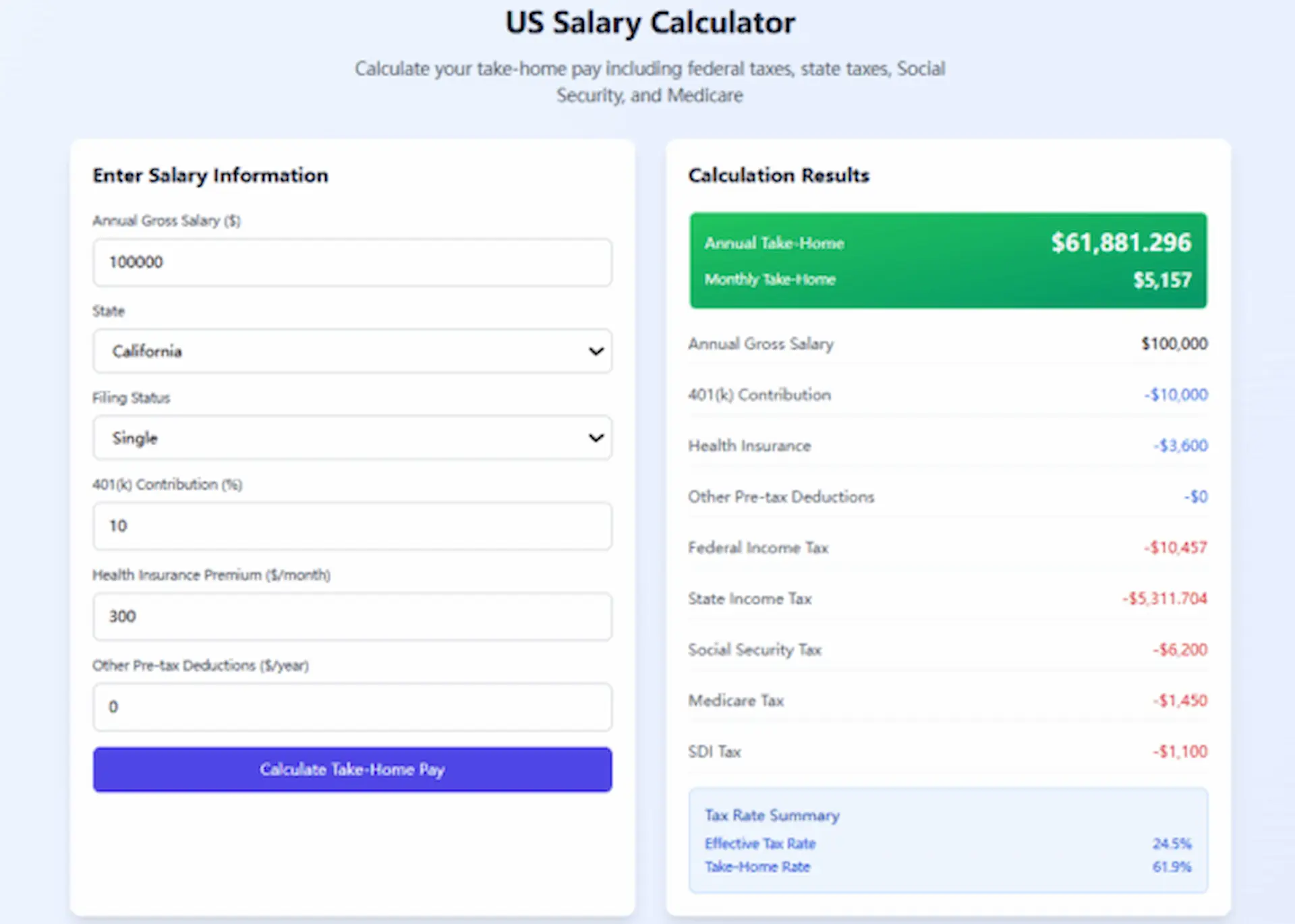
To get an accurate idea of your net salary, it’s crucial to consider not just your gross earnings, but also deductions like taxes and benefits. This is where the Salary Calculator AI tool comes in.
- Easy-to-Use: Simply enter your expected gross salary and your location into the tool, and it will calculate your taxes, deductions, and provide you with your net take-home pay.
- Multi-Region Support: The tool works for various countries, adjusting for different tax systems and benefits.
- Precise Results: It accounts for your specific deductions (e.g., health insurance, retirement contributions) to give you a realistic estimate of what you will actually bring home.
- Helps With Career Decisions: If you're comparing job offers, Salary Calculator AI can help you evaluate which role will give you the best after-tax income.
This tool is a valuable resource for any actuary looking to plan their finances and make smarter career decisions.
Why does salary still matter in 2026?
In 2026, actuary salary remains one of the most competitive for analytical careers. With strong median wages, clear paths for career growth, and excellent job stability, actuarial science continues to attract professionals seeking both financial rewards and meaningful work.
As the demand for actuarial services continues to grow in industries like insurance, healthcare, and pensions, actuary salaries are likely to continue increasing. Whether you’re just starting out or looking to advance in your career, understanding your earning potential is essential. Using tools like Salary Calculator AI allows you to estimate not just your gross salary, but the actual amount you will take home, making it easier to plan your future.
By leveraging data and making informed decisions, you can maximize your earning potential in the actuarial profession while ensuring that your career path aligns with your financial goals.
FAQ
Do actuaries make a lot of money?
Yes, actuaries are among the highest-paid professionals in the analytical fields. With average salaries starting at around $70,000 for entry-level positions and reaching $200,000+ for top executives and fellows, actuarial science offers strong earning potential.
Can actuaries earn $500,000?
While $500,000 is rare, senior actuaries in high-level positions, particularly in consulting or large corporations, can earn substantial compensation, often including bonuses and profit-sharing options that bring their total earnings close to or above this amount.
What do actuaries do?
Actuaries assess risk and uncertainty in insurance, finance, pensions, and other industries. They use mathematics, statistics, and financial theory to evaluate future events, such as life expectancy or natural disasters, to guide business decisions.
How much do actuaries make in China?
Salaries for actuaries in China vary based on experience and industry, but entry-level actuaries can expect to earn approximately RMB 100,000 to 200,000 annually, while senior actuaries in large firms may earn significantly higher salaries.
References
BLS Occupational Outlook Handbook