
- How Do Americans Automatically Save from Their Paychecks?
- What Happens When You Set Up Automatic Payroll Deductions?
- What Are the Real Benefits of Saving Straight from Your Salary?
- Is a Salary Saving Plan the Same as Salary Sacrifice?
- How Can Smart Tools Help You Plan Your Income Better?
- When Is the Right Time to Start Saving from Your Salary?
- Why Should This Be a Key Part of Your Financial Strategy?
- FAQs
Salary Saving Scheme Explained: How Americans Save from Paychecks in 2026?

A salary saving scheme is a structured way for U.S. employees to save a portion of their income directly from their paychecks before it ever reaches their bank accounts. This approach encourages disciplined, automated saving and often comes with tax advantages. Unlike a regular savings account that relies on manual transfers, a salary saving scheme works in the background—making saving a default behavior, not a decision.
How Do Americans Automatically Save from Their Paychecks?
A salary saving scheme is a structured way for U.S. employees to save a portion of their income directly from their paychecks before it ever reaches their bank accounts. This approach encourages disciplined, automated saving and often comes with tax advantages. Unlike a regular savings account that relies on manual transfers, a salary saving scheme works in the background—making saving a default behavior, not a decision.
What Happens When You Set Up Automatic Payroll Deductions?
When employees enroll in a salary saving scheme, a fixed amount or percentage of their gross salary is deducted each pay cycle and redirected to a designated savings or retirement account. In the U.S., this often involves tools like 401(k) plans, Roth IRAs, or even high-yield savings accounts set up through payroll. The beauty of this setup is that it eliminates the need for active participation—your savings grow without requiring constant attention. That’s the power of a well-structured salary saving scheme.
What Are the Real Benefits of Saving Straight from Your Salary?
A salary saving scheme provides several real-life benefits:
- Consistency: Automating savings builds long-term financial discipline.
- Tax advantages: Many salary saving schemes offer pretax or tax-deferred growth options.
- Reduced spending temptation: Money never hits your checking account, reducing the urge to spend.
- Emergency readiness: With savings in place, you're better prepared for unexpected costs.
Whether you're saving for a down payment, retirement, or just building a rainy-day fund, a salary saving scheme supports those goals with structure and ease.

Is a Salary Saving Plan the Same as Salary Sacrifice?
Though they sound similar, a salary saving scheme is different from a salary sacrifice arrangement. In the latter, an employee voluntarily reduces their gross salary in exchange for non-cash benefits, such as enhanced retirement contributions or insurance. While both strategies offer tax advantages, a salary saving scheme is directly focused on accumulating savings, whereas salary sacrifice often restructures compensation for benefit optimization. Understanding the difference can help you choose the best approach based on your financial priorities.
How Can Smart Tools Help You Plan Your Income Better?
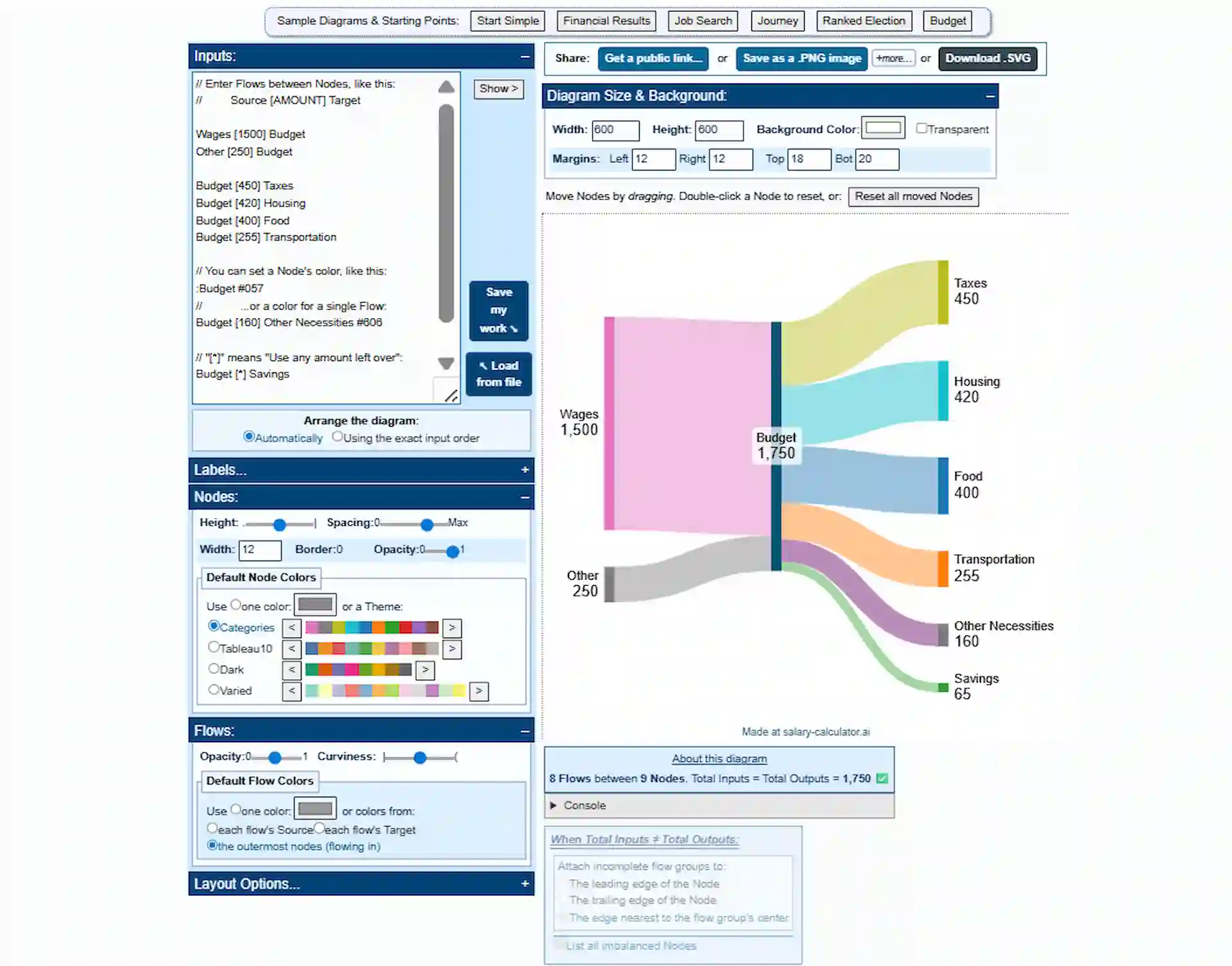
To make your salary saving scheme even more effective, tools like our Salary Calculator AI can be game changers. It offers a dynamic Sankey diagram that visualizes your full income distribution—from gross pay through taxes, savings, and take-home income. This visual map allows you to:
- See exactly how much of your salary is being saved
- Adjust variables like savings rates or tax contributions
- Forecast long-term outcomes of your current saving strategy
This feature is part of our Annual Budget Flow tool, which provides a detailed breakdown of your income and expenses in a clear and interactive way. By using this tool, you can easily understand how your income flows into various categories such as taxes, housing, food, transportation, and savings.
This helps users better understand the true impact of their salary saving scheme and make smarter, more confident financial decisions. It's more than just a calculator—it's a planning partner.
With the Annual Budget Flow tool, you can adjust inputs and explore various scenarios to optimize your financial planning. Whether you want to save more, adjust for tax changes, or manage your monthly expenses, this tool puts you in full control of your financial future.
When Is the Right Time to Start Saving from Your Salary?
The best time to start a salary saving scheme is right now. The earlier you begin, the more time your money has to grow. Compound interest, tax benefits, and disciplined saving all amplify over time. Whether you're just starting your career or already mid-way through, it’s never too late—or too early—to set up a salary saving scheme that supports your future.

Why Should This Be a Key Part of Your Financial Strategy?
A salary saving scheme isn't just a budgeting tactic—it’s a foundational step toward financial security. Automating your savings means you no longer have to rely on willpower or timing. You build wealth systematically, reduce stress, and prepare for life’s uncertainties. When combined with smart tools like Salary Calculator AI, your savings plan becomes a clear, visual, and powerful part of your long-term financial success.
FAQs
What is the 70/20/10 rule for money?
The 70/20/10 rule is a budgeting method where:
- 70% of your income goes toward living expenses
- 20% goes toward savings or investments
- 10% is used for debt repayment or donations
This rule is popular because it is simple and flexible, especially for people trying to balance everyday spending with long term financial goals.
What is the best salary saving rule?
There is no single “best” saving rule because it depends on your income, cost of living, debt, and financial goals. However, the most commonly recommended strategies include:
- the 50/30/20 rule
- the 70/20/10 rule
- automatic paycheck savings
For many Americans, the best approach is the one that is realistic and sustainable over time rather than overly restrictive.
What is the 3 6 9 rule of money?
The 3 6 9 rule of money usually refers to emergency savings goals:
- save 3 months of expenses if you have stable income
- save 6 months if your income is less predictable
- save 9 months or more during uncertain economic conditions
This rule became especially popular after inflation, layoffs, and remote work instability increased financial anxiety in recent years.
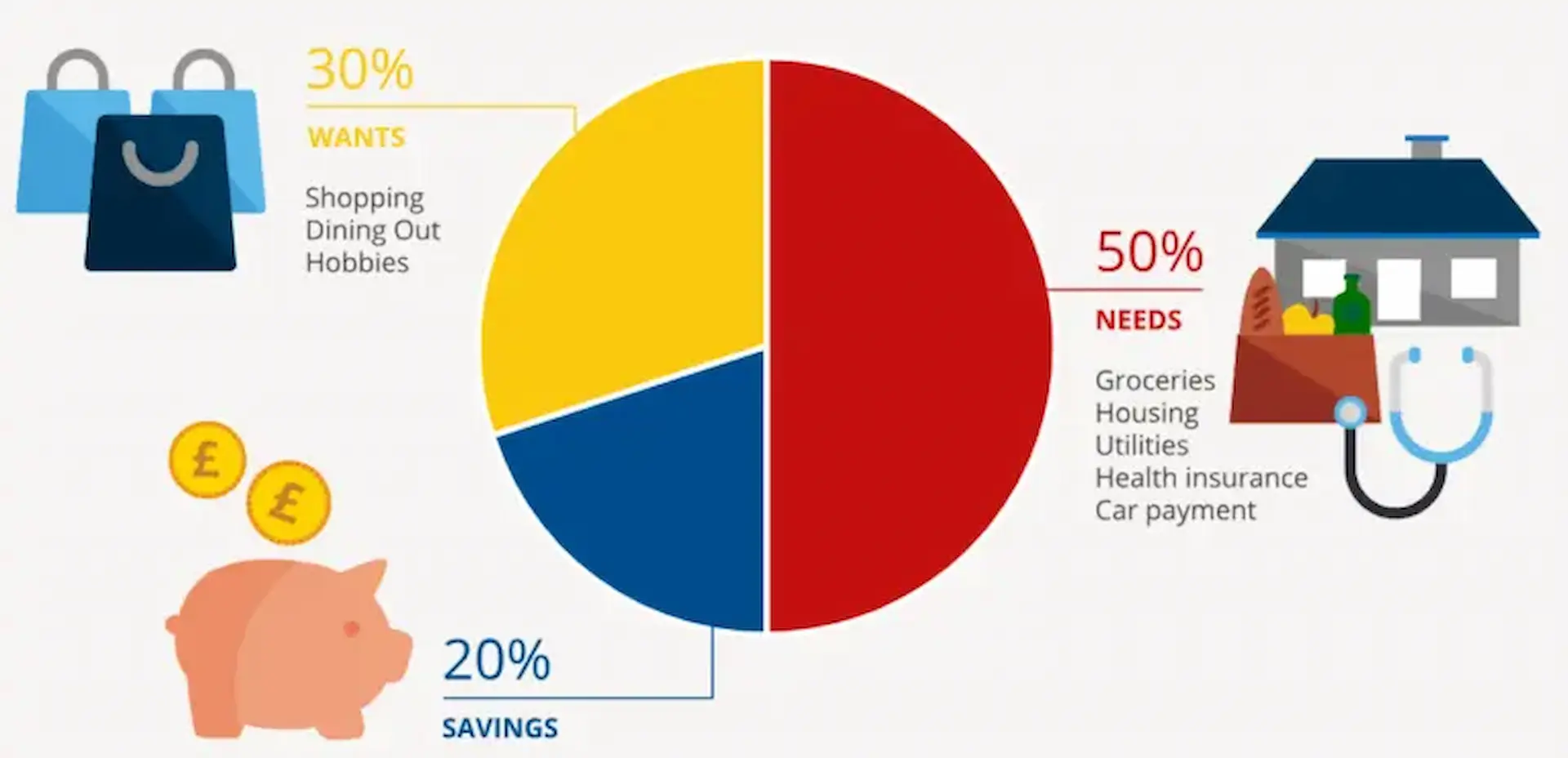
What is the 50/30/20 rule of money?
The 50/30/20 rule is one of the most popular budgeting frameworks:
- 50% of income goes to needs like rent, bills, and groceries
- 30% goes to wants like entertainment or travel
- 20% goes to savings and investments
Many people use this method to create a balanced paycheck saving strategy without tracking every single expense category.